
The Monday Night Wars changed professional wrestling forever and created the greatest era in sports entertainment history. What started as a risky programming gamble with WWF vs WCW turned into an all-out battle for ratings, stars, and survival in the 1990s. For instance, when WWF’s Monday Night Raw went head-to-head with WCW’s Monday Nitro in 1995, fans suddenly had two live wrestling shows fighting for attention every single week.
This proved it wasn’t just competition. It was war.
From backstage politics to shocking on-air moments, the Monday Night Wars reshaped how wrestling was presented on television. Major stars jumped sides, storylines became edgier, and both companies pushed creative limits like never before. This era gave us Stone Cold Steve Austin’s rebellion, The Rock’s rise to Superstardom, and the NWO turning wrestling upside down. For 83 straight weeks, WCW crushed WWF in the ratings and looked unbeatable. Then momentum shifted fast.
This is the complete story of the war that saved WWE and killed WCW, a defining chapter in WCW vs WWF history.
Before the War: How WCW Challenged WWF’s Monopoly
WWF’s Dominance (1980s – Early 1990s)
When new WWF ownership took control of the company in the early 1980s, the entire industry changed. Hulkamania, WrestleMania, and national television exposure transformed wrestling into a pop culture powerhouse. Hulkamania, WrestleMania, and national TV turned wrestling into a pop culture force. WWF went coast to coast, signing top stars and draining the territory system of its biggest names. By the early 1990s, fans on tape-trading circles and newsletters agreed on one thing: WWF had no real competition. It was their industry.
Ted Turner Buys WCW (1988)
Ted Turner changed the landscape by buying Jim Crockett Promotions and rebranding it as World Championship Wrestling. WCW had credibility, legacy championships, and stars like Bret “The Hitman” Hart, Kevin Nash, and Lex Luger. Still, despite strong talent and national TV, WCW struggled to shake WWF’s grip on the mainstream audience.
Eric Bischoff’s Vision (1993-1994)
Eric Bischoff took control of WCW with a bold mindset. He saw WWF weakened by scandals and sliding ratings. Backed by Turner’s money, Bischoff believed aggression was the answer. WCW wouldn’t coexist. It would compete.
The Declaration of War
On September 4, 1995, WCW launched their own primetime Monday night program. This move created a head-to-head battle with Monday Night Raw vs Nitro. For the first time in over a decade, WWF faced true national competition because Bischoff’s plan was clear and ruthless: use Turner’s money to sign WWF’s biggest stars, present a more adult and edgy product, and beat WWF on his own night.
WCW was coming for blood, and the WWF vs WCW war was on.
Phase 1: WCW Dominates (1995-1997)
WCW’s Early Advantages
When WCW launched Nitro in 1995, it immediately felt fresher and more urgent than the WWF, making the Monday Night Raw vs Nitro conflict very one-sided. Nitro aired live every week, while Raw was often taped far in advance, making spoilers a real problem. Eric Bischoff leaned into that edge by openly revealing Raw’s taped results on-air, which frustrated WWF fans but worked. WCW also had deep financial backing, allowing them to outspend WWF for top talent.
Early Nitro episodes looked sharper too, with better lighting, bigger crowds, and a presentation that felt closer to real sports than cartoon wrestling. Fans on long-running message boards like SquaredCIrcle often point to this period as the first time WCW felt like the industry leader.
The Talent Raids Begin
Major WWF Stars Who Jumped to WCW (1995-1996):
WCW wasted no time raiding WWF’s roster. Lex Luger shocked the wrestling world by appearing unannounced on the very first Nitro. Soon after, Randy Savage jumped ship, followed by Hulk Hogan, still the biggest name in wrestling. The real turning point came in 1996 when Kevin Nash and Scott Hall arrived as The Outsiders. Known in WWF as Diesel and Razor Ramon, they felt like genuine invaders rather than recycled stars. That sense of reality hooked fans and fueled endless speculation online.
The NWO Changes Everything (July 1996)
On July 7, 1996, Hulk Hogan’s heel turn—joining Scott Hall and Kevin Nash to form the New World Order (NWO)—was the most seismic, shocking event in wrestling history. The ultimate babyface became wrestling’s top villain.
The NWO storyline was utterly revolutionary. It presented WCW as being “under invasion” by outsiders, blurring the lines between fiction and reality with guerrilla-style promos. This instantly made the promotion feel dangerous and unpredictable.
The NWO became the hottest thing in wrestling, causing WCW Monday Nitro to defeat WWF Raw in the ratings for 83 consecutive weeks, pushing the competition to the brink.
WWF’s Struggles (1995-1997)
The mid-1990s were a disastrous period for the company.
The product felt stale, aimed squarely at kids, failing to resonate with adult viewers. Outdated cartoon gimmicks like The Goon and Duke “The Dumpster” Droese certainly didn’t help. Critical issues included losing major stars to WCW, which exacerbated severe financial troubles and pushed the company close to bankruptcy.
Morale was low; the entire “New Generation” era felt doomed.
The Turning Point: WWF Fights Back (1996-1997)
Stone Cold Steve Austin Emerges
In June 1996, the same month the NWO shook WCW, Stone Cold Steve Austin accidentally ignited WWF’s rebellion. His off-the-cuff “Austin 3:16” promo at King of the Ring wasn’t scripted to change the business, but fans instantly latched onto it.
Wrestling forums often point out how Austin felt real at a time when WWF characters still felt cartoonish. He wasn’t polished or corporate. He flipped the bird, acted reckless, and said what frustrated fans wanted to say. “
Austin 3:16” became more than a catchphrase. It became WWF’s battle cry. Management quickly realized they had lightning in a bottle and began reshaping the company around Austin’s anti-authority edge.
Bret Hart vs Shawn Michaels Rivalry
While Austin captured the crowd’s anger, Bret Hart and Shawn Michaels delivered must-watch television. Their rivalry blurred the line between fiction and reality, fueled by genuine backstage tension that fans could sense. Message boards from the era still debate whose style was superior, but most agree their technical brilliance stood out against WCW’s aging main event scene. Every promo felt loaded. Every match felt personal.
That intensity pushed WWF storytelling to a new level and set the stage for one of wrestling’s most infamous moments…
The Montreal Screwjob (November 9, 1997)
- WWF Ownership screwed Bret Hart out of WWF Championship
- Bret refused to lose title in Canada before leaving for WCW
- The WWF Commissioner ordered the ref to ring bell during Sharpshooter
- Real controversy that shocked the wrestling world
- Created evil boss characters based on WWF company leadership
- Turned company leadership heel and made Austin’s nemesis real
The Montreal Screwjob stands as wrestling’s most explosive, real-life controversy and a tipping point in the Monday Night Raw vs Monday Nitro rivalry. When Bret Hart refused to drop the WWF Championship to Shawn Michaels in Canada before leaving for WCW, WWF took drastic action. WWF Ownership ordered the referee to ring the bell during a Sharpshooter submission, costing Bret the title. This genuine moment of betrayal immediately shocked the world, effectively turning company leadership into a villainous character and creating the ultimate, believable nemesis for Stone Cold Steve Austin in the form of a ‘corrupt’ organization head.
D-Generation X Forms
Shawn Michaels and Triple H ignited the Attitude Era by forming the original D-Generation X in late 1997. They were a raunchy, anti-authority group whose antics were immediately infectious. Their rebellious “Suck It!” catchphrase and signature crotch chops became absolute mainstream phenomena.
DX didn’t just push the envelope; they shredded it. Their legendary move to invade WCW events, including driving a tank to the Nitro arena, is the stuff of legend. This edgier, often hilarious content began attracting crucial older viewers, fundamentally transforming wrestling’s audience demographic.
The Attitude Era Begins
By late 1997, WWF fully embraced the Attitude Era. Edgier stories, adult themes, and reality-driven characters replaced the old formula. It was a risky gamble, but it finally gave WWF the momentum it desperately needed.
Phase 2: WWF Takes Over (1998-1999)
Austin vs WWF Leadership: The Greatest Storyline
Stone Cold Steve Austin vs WWF company leadership wasn’t just a wrestling feud. It was lightning in a bottle.
Fans connected instantly with Austin because he fought the same battle many people felt they faced every day. An arrogant boss abusing power versus a worker who refused to be controlled. That dynamic struck a nerve across America. Austin stunning WWF owners in the middle of the ring, pulling up in trucks, and humiliating the boss week after week created must-see television. Wrestling forums still point to this rivalry as the moment Raw became unpredictable and dangerous. Ratings climbed because fans had to see what Austin would do next.
The Attitude Era officially had its heartbeat.
The Rock Explodes (1998-1999)
Rocky Maivia simply didn’t click with fans as a smiling babyface in 1996. However, he brilliantly embraced a heel turn in late 1997, evolving into the arrogant, self-proclaimed “The Rock.” His charisma exploded, turning his catchphrases like “The Rock says…” into cultural phenomena.
The legendary Rock versus Austin rivalry defined the late 1990s, cementing The Rock as the WWF’s indispensable second megastar, driving the company to unprecedented heights.
WrestleMania XIV (March 1998)
WrestleMania XIV felt like a reset. Stone Cold defeating Shawn Michaels signaled a new era. Mike Tyson’s involvement brought massive mainstream attention and credibility. Fans knew they were watching a changing of the guard. Austin’s coronation as champion gave WWF a clear top guy and momentum followed immediately.
April 13, 1998: The Turning Point
On April 13, 1998, WWF Monday Night Raw finally defeated WCW Monday Nitro in the ratings, ending an excruciating 84-week winning streak for WCW.
What changed the tide? Simply put: better creative.
The WWF had the dynamic anti-hero Stone Cold Steve Austin and the rising star The Rock, fueling fresh, compelling storylines.
WCW, however, stuck to a stale nWo storyline with aging stars and suffered from disastrous creative choices. The momentum permanently shifted, leading to WWF’s dominance in the WWF vs WCW war for the next three years.
The Monday Night Raw Dominance
Key WWF Advantages (1998-1999):
WWF had the unstoppable star power of Stone Cold and The Rock, wrestling’s two biggest draws. They showcased a younger, more athletic roster and generated captivating angles like the Austin vs. WWF leadership feud. Better creative, a thriving Hardcore division, and the record-breaking Mick Foley “This Is Your Life” segment (8.4 rating) proved their momentum was unmatched.
WCW’s Decline Begins:
WCW stalled due to overreliance on the stale NWO and awful creative decisions, notably having David Arquette as champion. Older stars refused to elevate young talent, creating a crippling interpolitical environment where guaranteed contracts bred laziness.
WrestleMania XV (March 1999)
This event featured the first of the iconic Stone Cold vs. The Rock trilogy. It cemented both men as global megastars and confirmed to everyone that the WWF was clearly and definitively winning the war.
Phase 3: WCW’s Collapse (1999-2001)
WCW’s Death Spiral
Creative Disasters:
WCW’s final years were tragically marked by self-destruction and creative disasters. The infamous Finger Poke of Doom in January 1999 saw Hulk Hogan beat Kevin Nash with a simple poke, leaving fans feeling utterly insulted and betrayed. Worse still, the decision to crown actor David Arquette as WCW Champion in April 2000 completely destroyed the title’s credibility, making the company a laughing stock.
Under Vince Russo’s “Crash TV” booking, the focus shifted to constant, nonsensical swerves instead of stable, long-term storytelling. Tasteless moments, like the Oklahoma character mocking Jim Ross’ Bell’s Palsy, alienated many viewers. Meanwhile, endless, tiring NWO reboots meant fans stopped caring entirely.
Backstage Politics:
Behind the scenes, the environment was pure chaos. Star power was undermined by toxic politics; Hulk Hogan had creative control in his contract and refused to lose, while Kevin Nash notoriously booked himself as champion. Older stars frequently refused to put over younger, talented performers. Furthermore, generous guaranteed contracts meant many wrestlers had absolutely no incentive to perform at their best.
The constant turnover, with Eric Bischoff fired and Russo hired, guaranteed a total lack of direction.
Financial Problems:
The chaos translated directly to the balance sheet. WCW lost a staggering $62 million in 2000 alone. When Ted Turner’s company merged with AOL Time Warner in 2001, the new corporate bosses immediately wanted wrestling off their prestigious networks. This resulted in the catastrophic cancellation of WCW programming on both TNT and TBS, effectively removing the company’s life support.
WWF’s Peak Success (1999-2000)
WWF’s Megastars:
While WCW imploded, the WWF was soaring. Megastars like Stone Cold Steve Austin (the biggest draw in history), The Rock (at his peak before fully transitioning to Hollywood), and the newly formed main-event heel Triple H led the charge. The roster was stacked with talent like Mick Foley (in all his legendary personas) and The Undertaker (as the charismatic American Badass). The brilliant signing of iconsfrom WCW gave the WWF several instant, top-tier stars.
Historic Moments:
Historic Moments like Mankind winning the WWF Championship (which generated a massive ratings spike in 1999), the innovative TLC matches, and the brutality of the Royal Rumble 2000 main event cemented WWF’s dominance. The successful SmackDown launch on UPN in 1999 expanded their media empire further.
The Final Nail in WCW’s Coffin
By early 2001, WCW was hemorrhaging money and shedding viewers rapidly. Monday Nitro’s ratings had collapsed from heights of 5.0+ to barely 2.0. The decision by AOL Time Warner executives was swift and brutal.
On March 23, 2001, the unbelievable happened: During the final episode of WCW Monday Nitro, WWF company leadership announced they had purchased the entire company. The Monday Night Wars were finally, definitively over. WWF had won.
Why WWF Won and WCW Lost
What WWF Did Right
Creative Excellence:
WWF won the war through sheer creative brilliance. They birthed the two biggest stars wrestling had ever seen in Stone Cold Steve Austin and The Rock, and the emergence of authority-defying characters based around WWF leadership proved to be a stroke of genius. Their long-term storytelling, particularly Austin’s dramatic journey to the championship, captivated fans. Critically, they elevated the entire card, fostering a renaissance in both the midcard and the legendary TLC tag team divisions. They weren’t afraid to take massive, calculated risks with the boundary-pushing Attitude Era content.
Roster Management:
The company excelled at building its future. They forged main-event superstars out of young talent like The Rock, Triple H, and Mick Foley. Importantly, they didn’t just inherit stars; they made them, transforming “Stunning” Steve Austin into the revolutionary Stone Cold. They also engineered a tag team renaissance and developed a legitimate Women’s division, headlined by breakthrough stars like Trish Stratus and Lita.
Roster Management:
The company excelled at building its future. They forged main-event superstars out of young talent like The Rock, Triple H, and Mick Foley. Importantly, they didn’t just inherit stars; they made them, transforming “Stunning” Steve Austin into the revolutionary Stone Cold. They also engineered a tag team renaissance and developed a legitimate Women’s division, headlined by breakthrough stars like Trish Stratus and Lita.
Business Decisions:
WWF focused relentlessly on expansion. They cemented their future by going public with the WWF IPO in 1999, a massive business coup. They successfully diversified into merchandise, music, and the hugely profitable video game market, leveraging their brand power. The creation of SmackDown expanded their television dominance, ensuring total market saturation.
What WCW Did Wrong
Creative Failures:
WCW booked itself into oblivion. They ran the hugely successful nWo storyline into the ground until it was boring and confusing. Their greatest failure was a stubborn refusal to build new, homegrown stars, leaning instead on expensive veterans. Terrible booking decisions—like the infamous Finger Poke of Doom and putting the World title on David Arquette—alienated their dedicated fanbase, while the nonsensical “crash TV” style implemented by Vince Russo utterly failed.
Backstage Politics:
Internal chaos was a silent killer. Guaranteed, lucrative contracts bred a lazy roster that didn’t need to work hard, and older stars consistently refused to lose matches, preventing fresh talent from rising. Creative control clauses in veteran contracts handcuffed the bookers, while multiple leadership changes created an atmosphere of pure organizational chaos.
Business Failures:
The financial bleeding couldn’t be stopped. WCW lost a devastating $62 million in the year 2000 alone. The corporate merger of AOL Time Warner sealed their doom, as the new management saw no value in the sinking wrestling brand and canceled programming. They simply had no coherent business plan to halt the financial losses.
The Verdict:
WWF won because they adapted, took creative risks, and consistently created new, relevant stars. WCW lost because they relied too heavily on past glory, refused to change their internal structure, and ultimately allowed devastating backstage politics to destroy the product. The better company, with a focus on the future, won the war.
The Legacy: How the Monday Night Wars Changed Wrestling
Positive Impact
For wrestling fans, the late 1990s were simply the greatest era of wrestling ever. The fierce competition between WWE’s Raw and WCW’s Nitro forced both promotions toward excellence, resulting in incredible weekly television. We got more content than ever before (Raw, Nitro, SmackDown, Thunder), witnessed significantly higher production values, and saw the creation of legendary moments and stars that defined a generation.
For wrestlers, the Wars were a financial boom. Bidding wars between the companies drove salaries sky-high and secured better working conditions and more creative freedom for top talent. Wrestlers achieved mainstream recognition, earning more endorsements and media appearances than ever before.
For the industry, wrestling became bonafide mainstream entertainment. The period saw record-breaking ratings and attendance. The market for video games, merchandise, and movies expanded exponentially, and WrestleMania solidified its place as a truly global cultural event.
Negative Consequences
WWE’s Monopoly: The darkest fallout was the lack of competition after WCW ultimately died in 2001. With no viable threat, WWE lacked the incentive to innovate, leading to a recognized product decline (roughly 2002–2010). Salaries plummeted without competitive bidding, and wrestlers suddenly had no leverage to negotiate contracts.
WCW’s Death: The demise of WCW was a tragedy, as hundreds of wrestlers and staff lost their jobs. Fans lost their crucial second major option, and the territorial era of wrestling was completely extinguished, leading to the total consolidation of the industry under the WWE banner.
Long-term Effects: The Monday Night Wars unequivocally proved that competition makes wrestling better. When WWE faced a monopoly (2001–2010), the product stagnated. Only when AEW launched in 2019 did WWE significantly improve again. Unfortunately, the Wars also created unrealistic expectations. Fans constantly compare modern wrestling to the Attitude Era, even though that era was lightning in a bottle that can’t be replicated.
Experience the Monday Night Wars in WWE Champions
CTA Section: Relive the greatest era in wrestling history by playing as the legends who defined the Monday Night Wars:
Stop just reminiscing about the late 90s and start controlling it!
That era of intense competition created the biggest stars and the wildest moments, and now you can command those legends right on your phone.
WWE Champions lets you build your ultimate roster and settle those long-standing debates about which side truly had the better superstars.
WWF Attitude Era Stars:
You can collect and use the most influential players from both sides of the weekly rivalry!
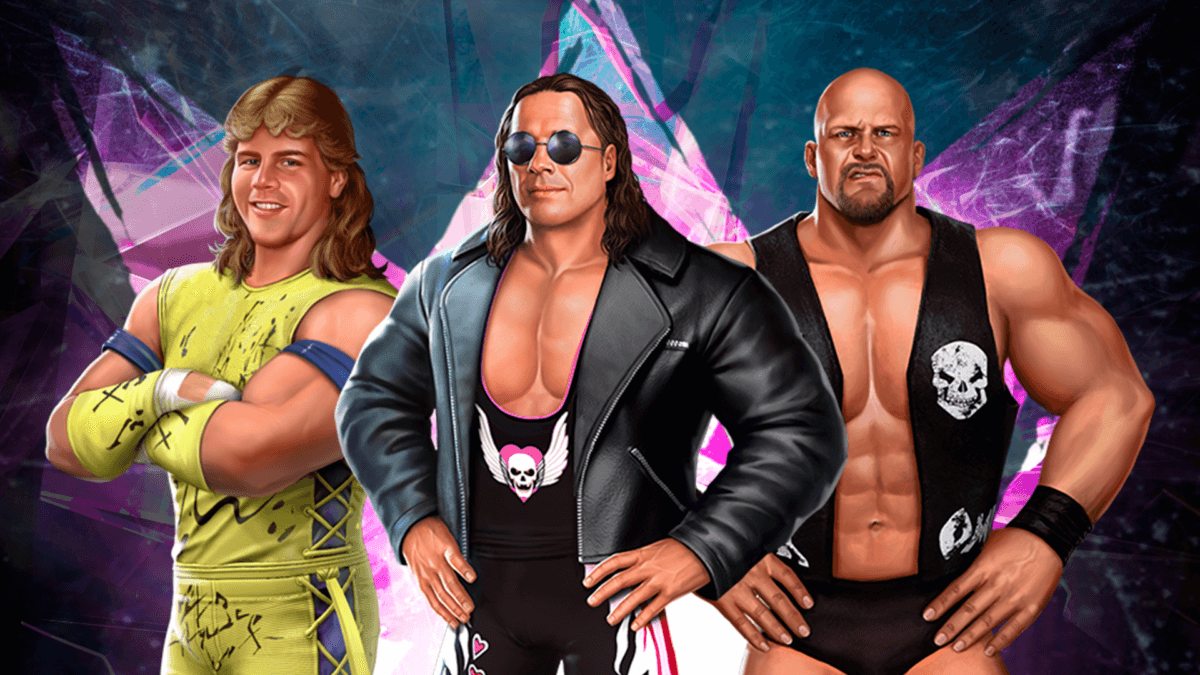
- Stone Cold Steve Austin (multiple versions)
- The Rock (multiple versions)
- Triple H
- Shawn Michaels
- The Undertaker
- Mick Foley / Mankind
- Bret “The Hitman” Hart
WCW Legends:
- Hulk Hogan (if available)
- Goldberg (if available)
- Kevin Nash (if available)
Now you can command the legends who made history and prove your team was the superior force.
Build your dream roster from both sides of the war. Recreate classic WWF vs WCW dream matches that never happened. Settle debates about which side had the better roster.
The Monday Night Wars created the greatest wrestling moments ever. Now you can command the legends who made history.
Play WWE Champions free today and experience the war that changed wrestling forever.
– WWE Champion Team